Lions can weigh up to 250 kg (550 lb).

They are found in grasslands, savannas, and open woodlands across sub-Saharan Africa.

Lions feed mainly on large mammals, including zebras, antelope, buffalo, and other hoofed animals.
Lion
The iconic lion is strong, majestic and so easy to recognise. Lions will make their presence known with their striking golden mane and booming roar that can be heard from miles away.
Discover all you need to know before meeting them in person and admiring them safely from a distance!
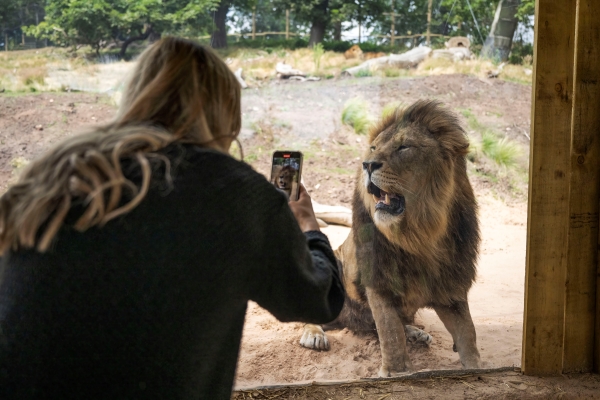
Meet our extraordinary African lions at their new habitat, home to four brothers born in 2019 – Hodge, Harabi, Havoc and Hercules. Watch these impressive cats roar and explore their enriched environment, featuring scented planting and dens.
Lions, known for their iconic manes, use roars to assert dominance and communicate across vast distances, with their calls carrying up to five miles. Our state-of-the-art housing ensures 24-hour access to indoor and outdoor spaces, surrounded by lush vegetation that encourages natural behaviours and exploration.
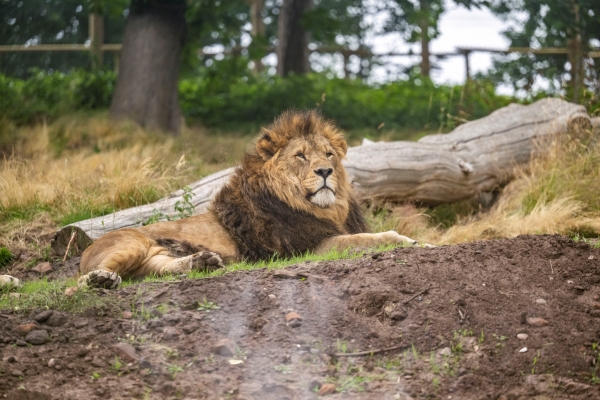
African lions are among the most powerful predators on the savannah, with males capable of weighing over 200 kilograms – more than four times the weight of an average human. Despite their strength, they are incredibly efficient hunters and conserve energy by resting for much of the day.
In the wild, lion populations have declined as human settlements expand into their natural range. This often leads to habitat loss and conflict with people. To conserve energy between hunts, lions can sleep for up to 20 hours a day, making them one of the most relaxed yet formidable animals in the animal kingdom.
What is the IUCN status of lions?
Due to a severe population decline over the last few decades, the lion is classified as Vulnerable on the IUCN Red List of Threatened Species. One of the biggest causes is the loss of their habitat, as humans continue to push into wildlife territories and move into areas where lions used to roam.
What is the lion’s scientific name?
The scientific name for the lion is Panthera Leo. Lions belong to the Panthera genus family, alongside other big cats like tigers, leopards and jaguars.
What are lions?
Lions are large, social cats belonging to the Panthera genus. They are the second largest living cat species after tigers and are the only big cats that typically live in social groups, known as ‘prides’.
What do lions look like?
Lions are big, strong cats with yellow-golden fur that makes them instantly recognisable! They have muscular bodies, powerful legs, large paws and short coats that help them blend into their surroundings. Male and female lions look different to each other. Adult males are recognisable by their manes, which can vary in colour and size. Females do not usually have manes and are smaller than males.
What is the size of a Lion?
Lions are among the largest cats in the world. Adult males can measure around 2.5–3.3 metres in length, including the tail, and are capable of weighing over 200kg – more than four times the weight of an average human. Females are generally smaller, typically 2.3 to 2.6 metres in length and weigh around 120–180kg.
What do lions sound like?
Lions are best known for their powerful roars, which help them communicate and establish their presence. They use roars to assert dominance and communicate across vast distances, with their calls carrying up to five miles.
Where do lions live?
Lions are mostly found across sub-Saharan Africa. A lion’s natural habitat includes grasslands, savannahs, scrublands and some open woodlands. A small population of Asiatic lions also lives in and around Gujarat in India. Historically, lions have lived across a much wider range spanning Africa, Europe and Asia.
What do lions eat?
Lions are carnivores and mainly eat large mammals such as zebras, wildebeest, buffalo and antelope. Lionesses often do much of the hunting within a pride, working together to bring down prey. Lions may also scavenge kills made by other predators.
Despite their strength, they are incredibly efficient hunters and conserve energy by resting for much of the day.
How long do lions live?
In the wild, lions typically live for around 10–15 years. However, Lions living in enclosed environments, like conservations, can reach late teens or early twenties due to the access to veterinary care, regular food and protection from threats found in the wild.
Lion communication
Lions communicate by using a combination of vocalisations, body language, scent marking and physical contact.
Roaring can help lions communicate over long distances, while grunts, growls, moans and other calls are used during closer interactions. Scent marking also helps lions establish territory and communicate information to other lions.
Lion behaviour
Lions are very social animals and usually live in groups called prides. Prides can include related females, their cubs and a small number of adult males. Lions spend much of their time resting and conserving energy between periods of activity and hunting. They sleep for up to 20 hours a day, which makes them one of the most relaxed yet formidable animals in the animal kingdom. They are generally most active during cooler periods, including at night and around dawn or dusk.
Lion conservation
In the wild, lion populations have declined as human settlements expand into their natural range. This often leads to habitat loss and conflict with people. Conservation efforts focus on protecting habitats, supporting local communities and reducing human-wildlife conflict. Learn more about our lion conservation efforts here.
Lion FAQs
Are lions the biggest cats?
No. Lions are the second-largest living cat species after tigers. Adult male lions can weigh over 200kg.
Do female lions have manes?
Female lions do not normally have manes. The mane is a characteristic feature of adult male lions, although its size and colour can vary between individuals.
How far can a lion's roar be heard?
A lion's roar can travel several kilometres, allowing lions to communicate across large territories.
Lion fun facts
1. Male lions develop their characteristic manes as they mature.
2. Lions are born with spots that help the cubs avoid predators by blending into their surroundings.
3. Lionesses often work together when hunting.
4. Lions are the only big cats that routinely live in social groups.
5. In the wild, lions oftentimes eat only a couple of times a week, sometimes even less depending on how successful their hunting efforts are.

Area
Area
Area